
What makes a porta potty ADA-compliant?
It comes down to space and reach, not just a bigger box. ADA Standards section 304.3.1 calls for a 60 inch turning circle inside the unit, so a wheelchair user can rotate without backing out the door. The doorway itself needs to open at least 32 inches clear, per ADA Standards section 404.2.3, and the path leading up to it needs at least 36 inches of clear width under section 403.5.1. Inside, controls like the door latch and paper dispenser have to sit within an unobstructed forward reach of 48 inches maximum and 15 inches minimum off the ground, under section 308.2.1, and every operable part has to work with one hand and no more than 5 pounds of force, per section 309.4. Floors have to stay stable, firm and slip resistant under section 302.1, which matters more than people think once a site gets muddy. If you are still working out unit counts before you get into accessibility, the porta potty placement guide and how many porta potties do I need pages walk through that math first. Our ADA accessible porta potty page has full specs on the unit itself.
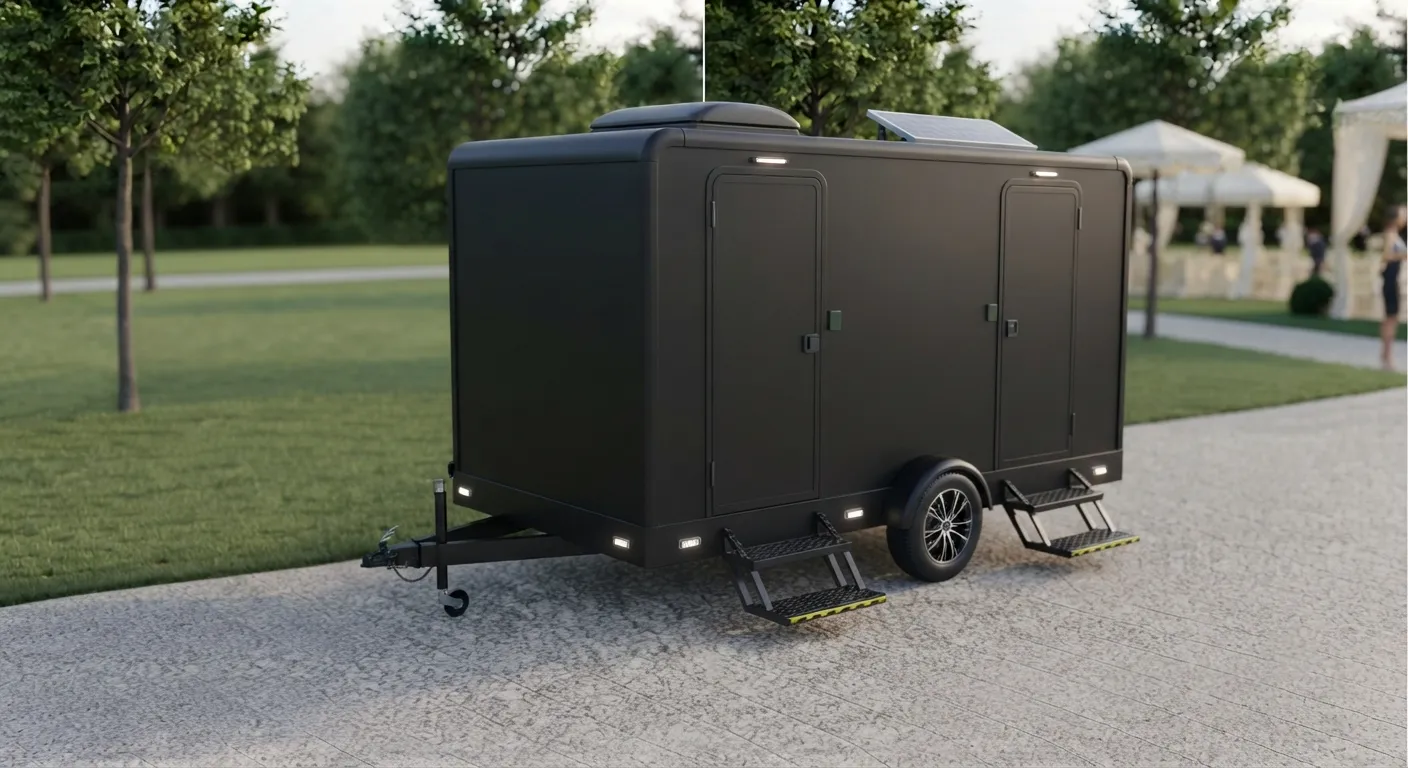
How many ADA units does a job site need?
One accessible unit per cluster, minimum, under ADA Standards section 213.2, even if the cluster is small. That rule does not scale up the way OSHA's toilet ratios do. OSHA 1926.51(c)(1) sets the general toilet count for construction sites at 1 facility per 20 workers or fewer, rising to 1 toilet and 1 urinal per 40 workers between 20 and 200, and 1 per 50 workers at 200 or more. So a crew of 45 in Antioch needs roughly two toilets and a urinal under that ratio, and at least one of the units on site still has to meet the ADA spec regardless of headcount. That is a separate compliance line, not a percentage of the total. General contractors managing construction site services in Antioch usually order the ADA unit alongside the standard count rather than treating it as an add-on later, since retrofitting a site plan after delivery costs more in truck trips than it does in unit price. See OSHA portable toilet requirements for the full ratio table.
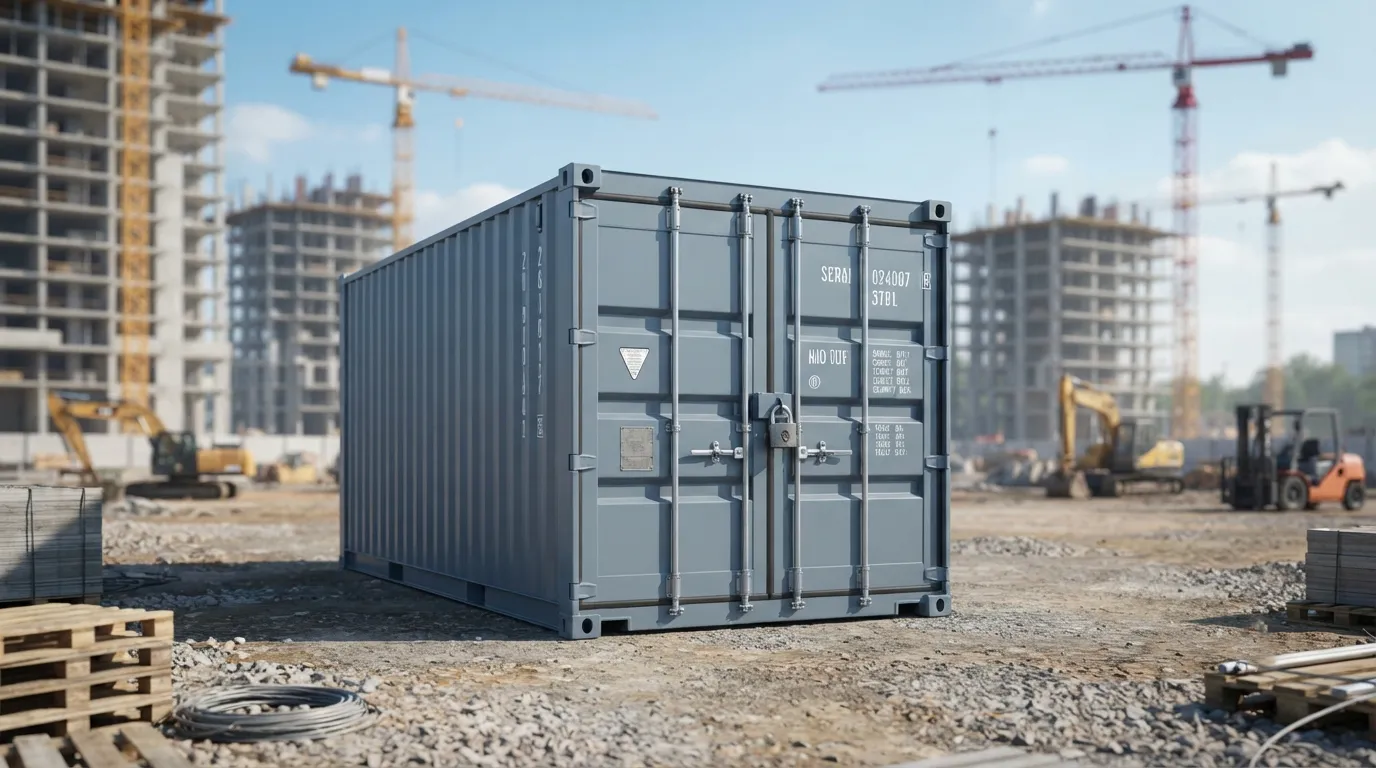
Where should the ADA unit go on site?
Close to the accessible parking or the main path of travel, on a surface stable enough to meet ADA Standards 302.1, and not stranded behind a curb or gravel berm. A ramp serving the unit cannot run steeper than 1:12 slope, per ADA Standards section 405.2, which rules out setting an ADA toilet at the top of a loose dirt mound just because that is where the rest of the units landed. Delivery trucks need roughly 60 feet of straight clearance behind them to place a roll-off, and while a single porta potty needs far less room, the same flat, reachable ground rule applies. If you are planning restrooms for a public event in Antioch rather than a job site, the event restroom rental and festival restroom restroom pages cover crowd-facing placement, and wedding restroom rental covers venue-specific layouts. For construction sites specifically, the porta potty placement guide has the full walkthrough on grading, clearance and path of travel.
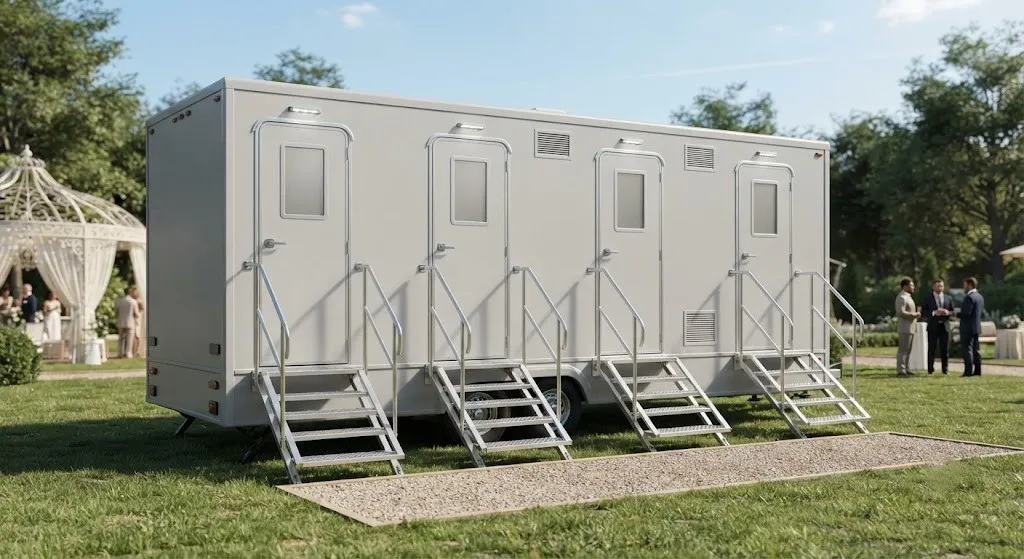
Does an ADA restroom trailer follow different rules?
No, the same clearances apply, just inside a bigger box with more room to spare. A restroom trailer rental built for accessibility still needs the 32 inch door, the 36 inch approach path and the 60 inch turning circle, and most trailer-based ADA stalls clear those numbers with room left over. The 2 stall and 4 stall trailer configurations both offer models with an ADA-compliant stall built in, and the luxury restroom trailer line does the same for weddings and corporate events where appearance matters as much as compliance. Trailers also solve the water problem that standalone units can't: general industry handwashing under 29 CFR 1910.141(d)(2) requires soap and a way to dry hands, not sanitizer alone, and a trailer with a plumbed sink satisfies that outright. If your job involves paint, coatings, herbicides or insecticides, OSHA 1926.51(f)(1) requires washing facilities for that specific exposure, which is a separate trigger from general jobsite sanitation. Pair a trailer with a handwashing station rental or standalone portable sink rental if you need both.
Frequently asked questions
Is a hand sanitizer station enough for ADA or OSHA compliance?
No. 29 CFR 1910.141(d)(2) specifically requires soap and running water or a hand drying device, and sanitizer does not meet that standard. A hand sanitizer station rental works as a supplement, but pair it with an actual handwashing station rental if inspectors are part of your job.
Do I need an ADA unit even if my crew has no wheelchair users?
Yes. ADA Standards section 213.2 applies to the cluster, not to a specific worker's needs, and it requires at least one accessible unit regardless. Antioch Porta Pros includes that unit standard in most multi-unit orders rather than as a special request.
How much does an ADA porta potty cost in Antioch?
Daily rates for ADA units run from 200 to 400 dollars, weekly rates run 120 to 240 dollars, depending on term length and delivery distance. See porta potty rental cost and porta potty rental per day for full breakdowns.
Can I mix ADA and standard units on one delivery?
Yes, and most Antioch job sites do exactly that. One accessible unit satisfies section 213.2 for the whole cluster. Order both in the same call through request a quote and delivery gets scheduled as one trip.
What is the difference between ADA and deluxe flushable units?
ADA units meet accessibility specs like the 32 inch door and 60 inch turning circle. Deluxe units, covered on the deluxe flushable porta potty page, focus on flushing and interior comfort. Some units combine both features.
Next step
Get a delivery date
Tell us the address, the dates and the headcount. We size the order and confirm the route.