
How many restrooms does a farm crew need?
Start with the headcount, then apply OSHA 1928.110: one toilet and handwashing setup per 20 hand-labor employees, placed within a quarter mile walk of the work area. A 40-person crew spread across two fields usually needs two clusters, not one big bank of units by the barn. Antioch Porta Pros walks the property with you before quoting, because irrigation ditches, fence lines and access roads all change where a standard porta potty rental can actually sit. Weekly service follows the ANSI/PSAI Z4.3 baseline interval, one visit per week for up to 10 users over a 40 hour week, though harvest crews often need twice-weekly pumping. If you are unsure how many units your operation needs across multiple fields, the porta potty placement guide and the how many porta potties do I need calculator both walk through the math. Rates for a standard unit run 100 to 350 dollars a day depending on service frequency and distance, with weekly agreements typically landing between 130 and 500 dollars; see the full breakdown on porta potty rental cost and porta potty rental per day. Antioch sits 6.8 miles northwest of Brentwood and 8.7 miles west of Oakley, so crews working leased ground toward either town still fall inside a normal same-day delivery window. For general toilet counts on a farm crew, OSHA 1926.51(c) sets the baseline ratio, which is a separate requirement from the field sanitation rule above.
What handwashing setup does a farm need?
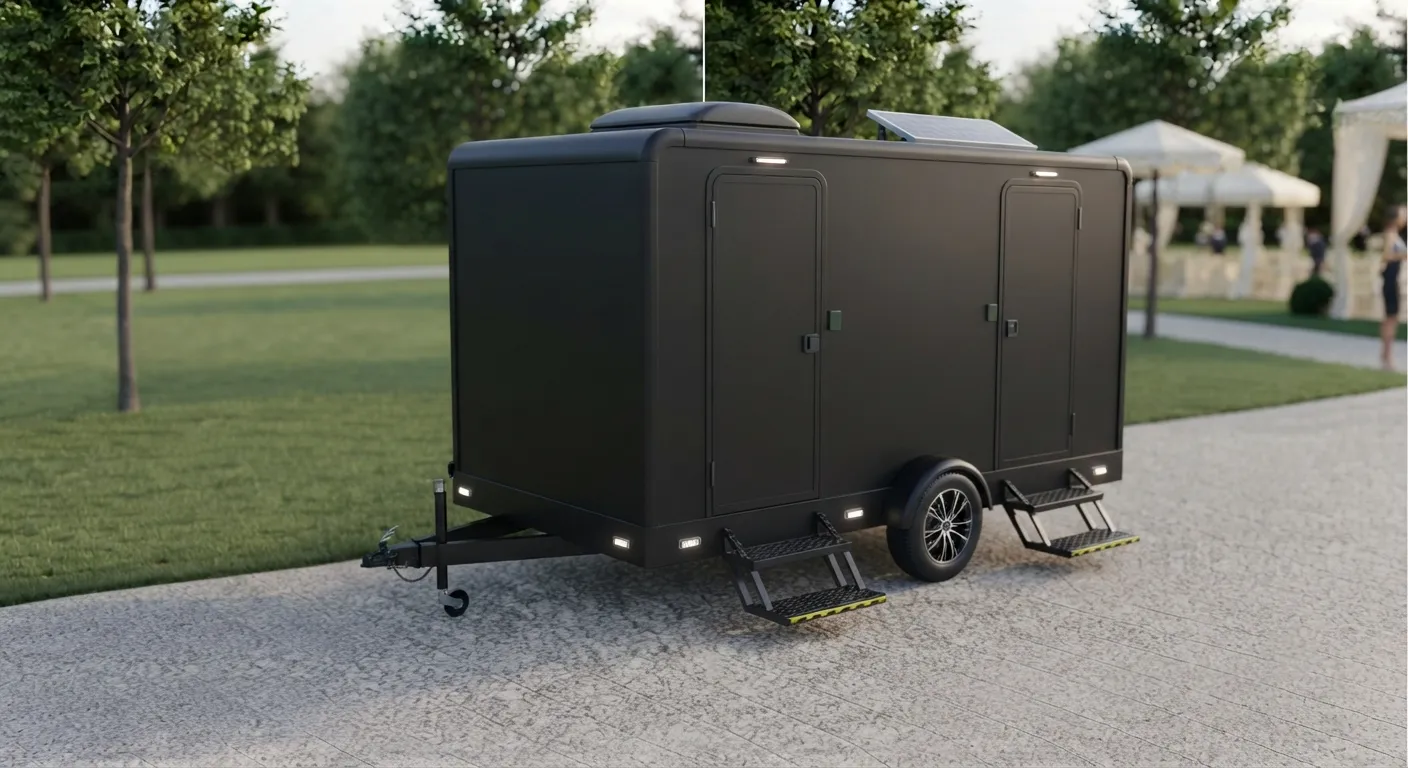
A field crew needs soap and towels at the sink, not a bottle of gel. 29 CFR 1910.141(d)(2) is explicit that hand sanitizer does not satisfy the washing facility requirement, so a handwashing station rental or portable sink rental with a working water reservoir has to sit next to every restroom cluster. OSHA 1926.51(a)(1) also requires an adequate supply of potable water at the jobsite, which for most Antioch operations means we fill the unit on delivery and top it off during the weekly or twice-weekly service run. If your crew handles crop protection chemicals like herbicides or insecticides, OSHA 1926.51(f)(1) requires washing facilities for that exposure specifically, on top of the general sink setup; the handwashing requirements page breaks down when each standard applies. A hand sanitizer station rental works as a supplement near equipment sheds or loading docks, but it is not a substitute for soap and water at the toilet cluster. Ranches running livestock alongside row crops often add a second sink near the barn, separate from the field cluster, so workers wash before handling animals. Antioch Porta Pros services both from the same route, which keeps the weekly cost down compared to two separate contracts. Farms closer to Livermore, about 29.0 miles south of Antioch, sometimes split delivery across two stops in one trip; ask about that when you request a quote.
Where should units go on a large property?
Place restrooms and sinks along the crew's actual walking path, not at the property entrance where the truck turns in easiest. OSHA 1928.110's quarter mile rule is measured from the work area, so a unit parked at the gate on a 200 acre parcel does not count if pickers are working the far end. Firm, level ground matters too. ADA Standards section 302.1 calls for stable, firm, slip resistant surfaces, and that standard is worth following even outside a formal ADA unit, because a porta potty sinking into irrigated soil after a watering cycle is a service call waiting to happen. If any of your crew needs an accessible unit, ADA Standards section 213.2 requires at least one accessible unit in any cluster of single-user toilets, and section 304.3.1 calls for a 60 inch turning circle in front of it; see the ADA accessible porta potty page for unit specs. A standard unit measures about 44 by 48 inches on the ground and stands roughly 92 inches tall, which fits most farm road shoulders without blocking equipment. For remote fields without reliable road access, a porta john rental on skids can be dragged closer to the work zone between moves. Seasonal harvest operations that run through winter months should also check the porta potty in winter page, since freeze protection changes the service schedule. Antioch's flatter valley ground generally drains better than the hillier ranch parcels toward Concord, 16.9 miles west, but low spots after rain still need a gravel pad before delivery.
Frequently asked questions
Do farm restrooms need a permit in Antioch?
Placement rules can differ by parcel and zoning, and permit requirements are not something we guess at. Confirm placement in any public right of way with the city before delivery day. For everything else, check the porta potty permit requirements page or ask us directly when you request a quote.
How often does a field crew's unit get serviced?
Weekly service is the baseline under ANSI/PSAI Z4.3, for up to 10 users over a 40 hour week. Harvest crews with 20 or more workers per unit often move to twice-weekly pumping. See how often are porta potties cleaned for the full schedule logic.
Can we rent just one unit for a small orchard crew?
Yes. A single standard unit covers up to 20 workers under OSHA 1928.110, as long as it sits within a quarter mile of the work area. Daily rates start at 100 dollars; check porta potty rental per day for current bands.
Do we need a handwashing station separate from the toilet?
Yes, under 29 CFR 1910.141(d)and OSHA 1926.51(a)(1), soap, towels and potable water are required alongside the toilet. Hand sanitizer alone does not meet the standard. See handwashing station requirements for specifics.
What if our crew moves fields every few weeks?
Antioch Porta Pros relocates units as the crew moves, billed as a standard delivery fee per move. Monthly agreements, from 125 to 325 dollars per unit, often work better than day-rate moves for long harvest seasons; see monthly porta potty rental for details.
Next step
Get a delivery date
Tell us the address, the dates and the headcount. We size the order and confirm the route.