
How Many Porta Potties Do I Need for a Construction Site?
Start with the crew size and the shift length, then check it against OSHA 1926.51(c). A crew of 15 needs just 1 unit. Once you cross 20 workers, the rule adds 1 toilet seat and 1 urinal for every 40 workers, and that ratio holds until you reach 200 workers, where it eases to 1 seat and 1 urinal per 50. A 45-person crew in Antioch working a single shift needs 2 toilets and 2 urinals under that table, not 3. Most crews round up anyway once you add a hand station, since OSHA 1926.51(a)(1) also calls for an adequate supply of potable water at the site. Pair the toilet count with a handwashing station rental or a smaller portable sink rental so wash-up isn't an afterthought. If the crew is mixed trades, or the job runs past dark, check the layout against a porta potty placement guide before delivery day, and confirm the full breakdown at OSHA Portable Toilet Requirements.
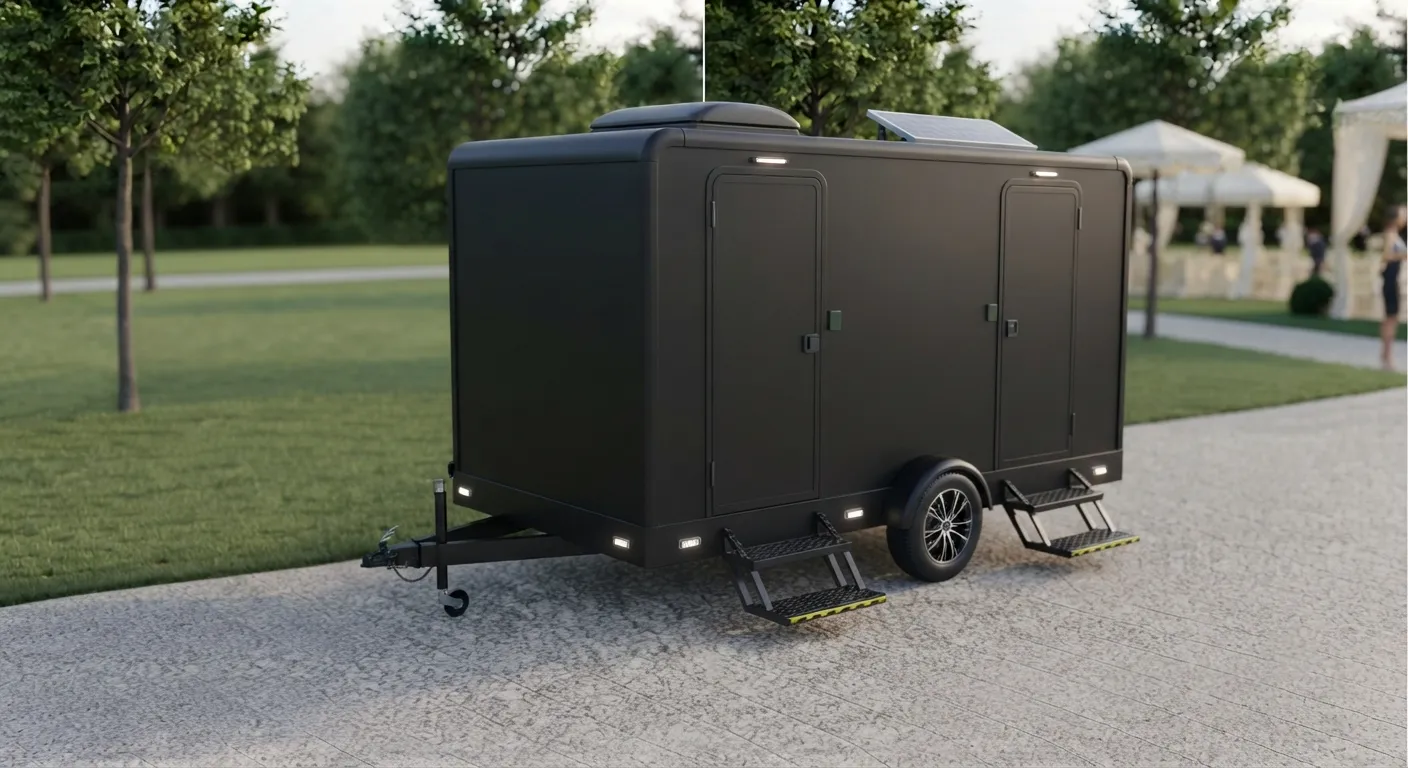
What's the OSHA Bracket Table Look Like in Practice?
The brackets aren't linear, they step. Here's how OSHA 1926.51(c) actually breaks down for jobsite planning:
| Workers | Toilet seats required | Urinals required |
|---|---|---|
| 1 to 20 | 1 | 0 |
| 21 to 60 | 2 | 2 |
| 61 to 100 | 3 | 3 |
| 101 to 160 | 4 | 4 |
| 161 to 200 | 5 | 5 |
| 200 plus | 1 per 50 workers | 1 per 50 workers |
A 75-person Antioch framing crew lands in the 61 to 100 bracket: 3 seats, 3 urinals. Renting standard porta potty rental units in that count covers the letter of the rule. For general industry work sites rather than construction, the ratio comes from 1910.141(c)(1)(i) instead, so confirm which standard applies before you order. Multi-week jobs usually do better on a monthly porta potty rental plan than repeated weekly orders.
How Many Porta Potties for an Event?
Events run on headcount and hours, not shift-based bracket math. A rough rule that holds up across festivals, weddings and fairs in Antioch: 1 unit per 50 guests for up to 4 hours, then add units as the clock or the guest list grows.
| Guests | 4 hours | 8 hours | Add for alcohol |
|---|---|---|---|
| 100 | 2 units | 3 units | +1 unit |
| 250 | 5 units | 6 units | +2 units |
| 500 | 10 units | 12 units | +3 units |
| 1,000 | 20 units | 24 units | +5 units |
Alcohol service pushes people toward the restroom line more often, so bump the count rather than stretch the wait. A 250-guest backyard wedding running 6 hours with a beer and wine bar should plan for roughly 6 to 7 standard units, or step up to a deluxe flushable porta potty line for a nicer guest experience. Bigger gatherings do better with a restroom trailer rental, especially a 4 stall restroom trailer for the 250 to 500 range. Always include at least 1 accessible unit per ADA Standards 213.2, which requires 5 percent of clustered units to be accessible with never fewer than one; see ADA accessible porta potty and the fuller ADA restroom requirements breakdown.
Should Multi-Day Events Add More Units?
Yes, and the increase isn't just more of the same unit. A 3-day festival needs the same per-hour ratio each day, plus a service visit built into the plan. ANSI/PSAI Z4.3 sets a baseline service interval of once per week for up to 10 users over a 40 hour week, which is far too infrequent for a busy multi-day event; expect daily or twice-daily service instead once usage climbs. Camping-style multi-day events in Antioch should also plan water refill visits alongside pump-outs. If the event includes vendors cooking on site, pair your restroom order with a hand sanitizer station rental at each food booth. For anything running more than 2 days, price it as a porta potty rental per day block rather than a single flat quote, since service visits change the math daily.
How Do I Size a Dumpster Alongside My Restrooms?
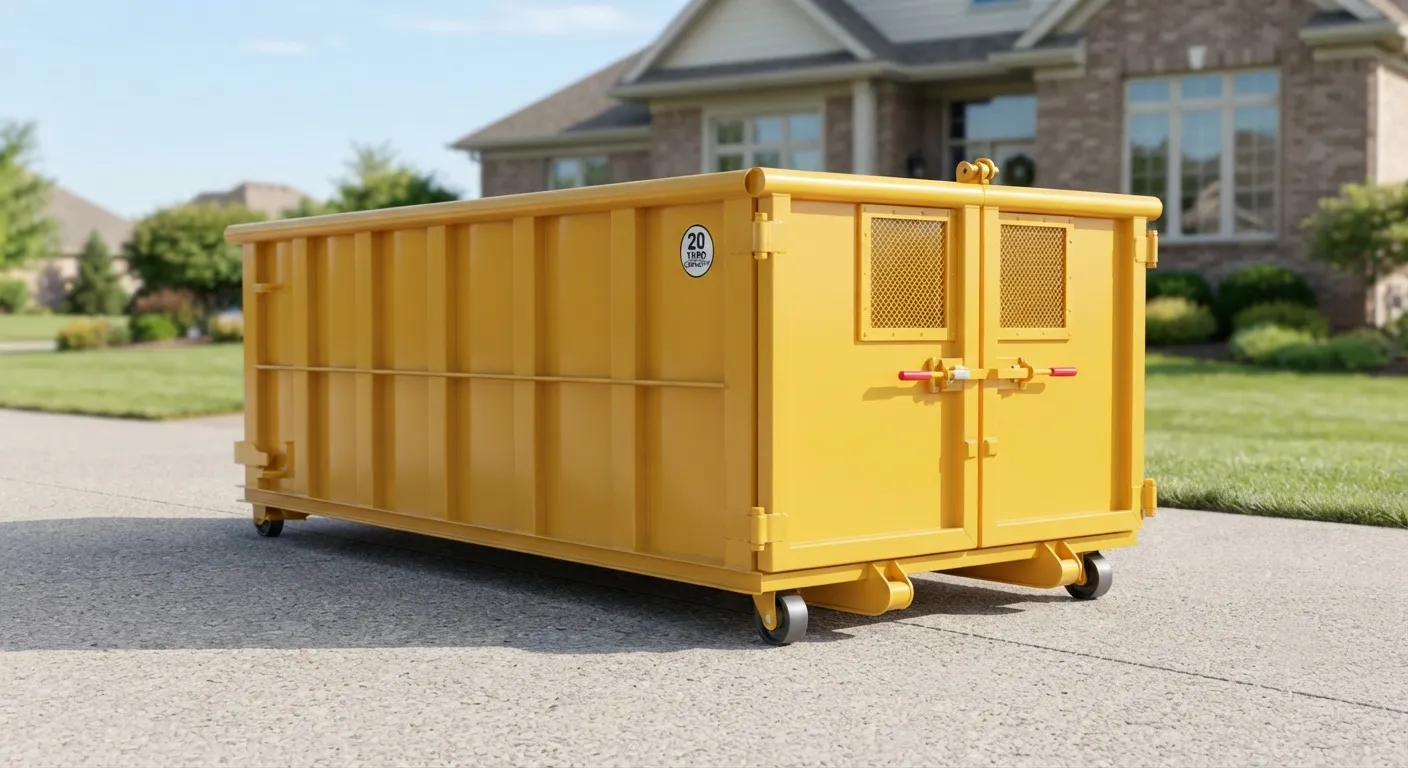
Most job sites ordering porta potties also need debris hauled, and dumpster size questions come up in the same breath as toilet counts. A 10 yard dumpster rental holds around 10 cubic yards, which works out to roughly 135 cubic feet, and suits a single-room remodel; the box itself runs about 14 feet long, which is the answer when someone asks how many feet is a 10 yard dumpster. A 20 yard dumpster rental runs about 20 feet long and holds close to 270 cubic feet, a common choice for a roofing tear-off. Move up to a 30 yard dumpster rental for a full home cleanout, at roughly 405 cubic feet, and a 40 yard dumpster rental tops out near 540 cubic feet for large new-construction debris. Weight matters as much as volume: how many tons does a 20 yard dumpster hold depends on the material, but mixed debris usually stays within truck limits at that size; how many tons can a 30 yard dumpster hold runs higher for the same reason, and how many tons does a 40 yard dumpster hold is higher still, though heavy material like concrete or shingles fills the weight limit long before the box looks full, and the 40 yard box's roughly 540 cubic feet answers how many cubic feet in a 40 yard dumpster. Check dumpster weight limits and the full dumpster sizes and dimensions chart before ordering, and see what cannot go in a dumpster so the load doesn't get rejected at the tip.
Do I Need a Permit for Placement in Antioch?
This depends on where the units sit, and it needs confirming with the city before delivery. If a unit or dumpster goes in the public right of way, on a street or a sidewalk, that placement typically needs sign-off, but the exact permit process for Antioch is not something we'll guess at here. Call the city planning or public works line before delivery day if the site plan puts anything off private property. For general orientation on what cities usually ask for, see porta potty permit requirements and, for dumpsters specifically, dumpster permit requirements. Placing units entirely on a private lot, driveway or fenced construction zone usually sidesteps the question entirely, which is one more reason a good porta potty placement guide pays for itself before the truck shows up.
What Else Should I Plan Around the Restroom Count?
Getting the headcount right is half the job; access and site prep are the other half. A roll-off delivery needs about 60 feet of straight clearance behind the truck, so a tight Antioch lot or a narrow alley off a downtown street can force a smaller box or a different drop spot. Standard units run about 44 by 48 inches on the ground and stand roughly 92 inches tall, which matters when you're tucking several units behind a fence line. Speaking of which, a jobsite with public foot traffic nearby often pairs restrooms with temporary fence rental or chain link temporary fence to keep the area contained. Evening work calls for a light tower rental, and any trailer with power needs should be checked against a temporary power pole setup rather than run off a generator alone. For septic-side planning on rural or agricultural sites near Antioch, see septic pumping service and farm and agricultural restrooms, since field sanitation for hand-labor crews falls under a different standard, OSHA 1928.110, which calls for one facility per 20 employees within a quarter mile walk.
Frequently asked questions
How many porta potties do I need for 100 guests?
For a 4 hour event, plan on 2 standard units; stretch to 8 hours and that climbs to 3. Add 1 more if alcohol is served. A backyard gathering in Antioch this size usually works fine with standard porta potty rental units rather than a trailer.
How many tons does a 30 yard dumpster hold?
It depends on the material, since weight limits cap out before the box looks full. Light construction debris fills the volume first; heavy material like concrete hits the weight cap long before that. Check dumpster weight limits for the specifics before loading.
How many cubic feet is a 20 yard dumpster?
Around 270 cubic feet, in a box that runs about 20 feet in usable length. That size handles a mid-size renovation or a roof tear-off comfortably. See dumpster sizes and dimensions for the full chart.
Do I need an ADA unit for a small event?
Yes, at least one. ADA Standards 213.2 requires 5 percent of clustered portable units to be accessible, with never fewer than 1 unit regardless of total count. Order it alongside your standard units, not as a separate afterthought.
How often do porta potties get serviced during a multi-day event?
More often than the weekly baseline. ANSI/PSAI Z4.3 sets 1 visit per week for light use, but a busy multi-day event usually needs daily or twice-daily service to keep pace with headcount.
What's the difference between jobsite and event restroom counts?
Jobsite counts follow OSHA 1926.51(c) brackets tied to crew size and shift length. Event counts follow guest headcount and hours, closer to 1 unit per 50 people for 4 hours. The two math paths rarely land on the same number for a similar headcount.
Next step
Get a delivery date
Tell us the address, the dates and the headcount. We size the order and confirm the route.